

Wood Industry Wastewater Treatment for Bark and Board Streams
Sector Overview
Wood Industry Wastewater Treatment for Bark and Board Streams
Sector Overview
Key Takeaway: The treatment system must address both classic bark-derived streams and higher-strength side streams within a unified concept.
Contents
Why is wood industry wastewater treatment important?
Wood-processing facilities produce wastewater that can vary widely in strength and composition. These wastewater streams can impact water quality through high oxygen demand, dark colour, low pH, and potential toxicity, so compliance testing must demonstrate that these effects are properly controlled. There is no single discharge limit that applies everywhere. Instead, permit conditions are set locally, depending on the receiving environment.
Treatment focuses on removing dissolved and fine organic materials released during processing, bark handling, and outdoor storage. In some cases, higher-strength side streams can add further load in the form of COD, VOC-related compounds, fine solids, and dissolved organics.
Ultimately, treatment selection and polishing steps should be driven by specific compliance requirements, ensuring that the system reliably addresses key risks such as oxygen demand, toxicity, colour, and pH while remaining robust under changing operating conditions. Once treated, this wastewater can be safely discharged or reused within the facility, helping to reduce both environmental impact and operating costs.
Why wood industry wastewater is difficult to treat
It is difficult to design a stable, consistent treatment system as the wastewater characteristics vary widely depending on the type of wood (softwood vs hardwood), the process (pulping, sawing, finishing) and the chemicals used: there is no one-size-fits-all solution. However, the most common characteristic of wood industry wastewater is large amounts of dissolved organic matter like lignin, cellulose, tannins, and resins. This leads to very high BOD and COD making biological treatment harder. In addition to that, phenols (toxic to microbes), formaldehyde, solvents, adhesives (from wood processing/furniture industries) and chlorinated compounds (in pulp bleaching) can kill or inhibit bacteria used in biological treatment systems. The challenge is in segregation and targeted sampling.
Influent testing for selecting treatment process
Before selecting a process, the influent should be tested before any biological design is fixed. The table below gives the starting conditions and constraints that the treatment system must be designed around. This should be the foundation for all sizing, selection, and performance decisions in the process.
| Parameter | Typical Basis to Establish |
|---|---|
| Average flow | m³/d |
| Peak flow | m³/h or peak factor on average flow |
| pH range | Minimum and maximum raw wastewater pH |
| TSS | Average and peak influent suspended solids |
| BOD / COD | Total and soluble fractions, average and peak |
| Color | Pt-Co or site-specific metric |
| Oil/grease, resin, floatables | Where relevant |
| Phenolics / tannins / lignin-related organics | If color/toxicity/refractory load is critical |
| Temperature | Seasonal minimum/maximum |
| Nutrients | Nitrogen and phosphorus availability for biology |
| Salinity / conductivity | If condensates or chemical streams affect biology |
| Side streams | Batch volume, frequency, and composition |
| Discharge standard | Final permit or reuse criteria |
The sources and characteristics of wastewater streams in wood processing are covered in the next section to outline the variable nature of the influent.
Sources of wastewater streams in the wood industry
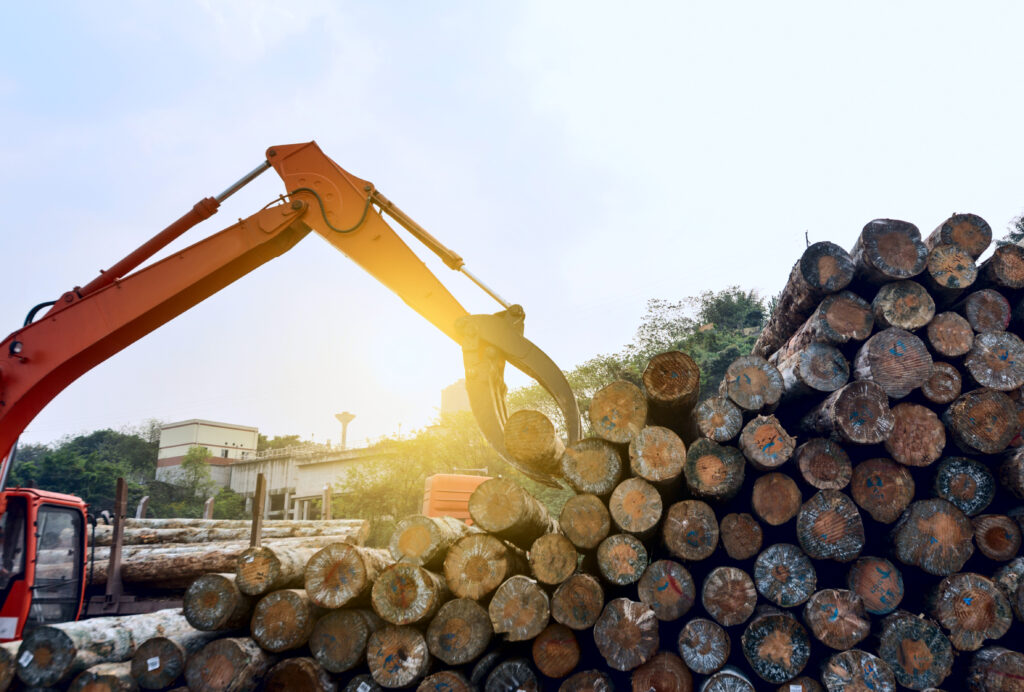
Core wood and bark derived wastewater sources: the main wood and bark related wastewater sources are wet debarking systems, bark presses, bark handling areas, wood and bark storage yards, chip piles, sawdust piles, yard runoff, irrigation return flows, and snowmelt or rainfall leachate.
MDF, HDF, fibreboard and chipboard side streams: additional side streams with high COD and solvent contaminants come from fibre preparation, board finishing, coating systems, condensate handling, floor washing, resin or additive handling, and cleaning operations. They often need separate characterization because the treatment strategy differs for coating residues, solvent traces, sticky fines, or condensate from air-emission control equipment.
Exhaust-cleaning wastewater and condensate: trickling filters or wet electrostatic filters in wood processing produce condensate or recirculating liquor from exhaust-cleaning. This should be included in the wastewater inventory, sampling plan, and equalization concept.
Characteristics of wastewater from wood processing
The table below provides an overview of different wastewater streams in wood-processing operations, summarizing what each stream contains (typical features) and what is important from a treatment and environmental perspective:
| Stream | Typical Features | Why It Matters |
|---|---|---|
| Wet debarking water | Moderate organic load with polyphenols and dissolved wood compounds. Water use can be high. | Can carry enough organics and toxicity to require clarification and further treatment. |
| Bark press water | Very high polyphenol content and complex organic profile. | Major contributor to colour, difficult-to-treat organics, and overall treatment demand. |
| Wood storage leachate / log-yard runoff | High COD, strong colour, and presence of tannins, lignin, resin acids, and phenolics. | High oxygen demand and toxicity make it a significant discharge risk. |
| Species effect in wood leachates | Variable pH (acidic) and low biodegradability depending on wood type. | Requires equalization and pH control; not suitable for direct biological treatment alone. |
| MDF / HDF / fibreboard side streams | May contain wood fines, resins, coatings, and possible solvents. | Different behaviour from other streams; may require separate handling and pretreatment. |
| Exhaust-cleaning condensate / WESF liquor | Intermittent streams with dissolved organics, fines, and solids. | Can disrupt treatment processes if not equalized before discharge. |
Treatment stages
Preliminary → Primary → Secondary → Tertiary → Sludge handling → Disinfection
The table below provides an overview of the sequence of treatment stages (from preliminary to disinfection) with a summary of the key processes involved in each stage and the function in wastewater treatment:
| Stage | Main Processes | Purpose |
|---|---|---|
| Preliminary Treatment | Screening, grit removal, equalization | Removes large debris such as wood chips, bark, and fibers, and stabilizes flow and pollutant concentration. |
| Primary Treatment | Sedimentation, dissolved air flotation (DAF) | Removes suspended solids, floating materials, resins, oils, and fibers to reduce the initial pollutant load. |
| Secondary Treatment | Activated sludge, attached growth (FBBR), aerated lagoons, trickling filters | Uses microorganisms to break down biodegradable organic matter and reduce BOD. |
| Tertiary / Advanced Treatment | Advanced oxidation, activated carbon adsorption, membrane filtration | Removes color, toxic compounds, and remaining COD that cannot be treated effectively by biological methods. |
| Sludge Treatment | Thickening, dewatering, anaerobic digestion | Reduces sludge volume and stabilizes it for safe disposal or possible reuse. |
| Disinfection | Chlorination, UV treatment | Eliminates pathogens before the treated effluent is discharged or reused. |
Recommended treatment train for wood wastewater
1. Source Segregation & Front-End Screening
Separate clean stormwater from bark-rich process water and isolate high-strength side streams (e.g., board-line discharges, coating wastes, solvent-bearing streams, exhaust condensates). This prevents shock loading and operational upset in downstream treatment units.
2. Equalization with Mixing
Provide an equalization tank with adequate mixing to buffer fluctuations in flow and contaminant concentrations caused by rainfall, snowmelt, wood species variability, bark storage conditions, intermittent pressing, and side-stream discharges.
3. pH Adjustment
Adjust pH where influent wastewater is acidic or where tighter control is required to optimize downstream coagulation and biological processes.
4. Coagulation & Flocculation
Apply chemical treatment when colour, colloidal material, bark fines, coating solids, sticky particles, or non-settleable suspended solids are present at elevated levels.
5. Physical-Chemical Separation (DAF)
Use processes such as dissolved air flotation (DAF) when solids are light or slow-settling and conventional clarification is insufficient.
6. Biological Treatment
Treat biodegradable COD and BOD following upstream solids reduction. Attached-growth systems such as FBBR are well suited to variable industrial loads.
7. Polishing / Tertiary Treatment
Apply final polishing processes—such as filtration, constructed wetlands, adsorption, membrane separation, or advanced oxidation—when discharge limits are driven by colour, toxicity, phenolics, tannins/lignin, refractory COD, or residual dissolved organics.
What to consider when designing a wastewater treatment system
Equalization and pH control
Equalization is usually the first design decision, not an optional add-on, because wood-industry water quality shifts with rainfall, snowmelt, irrigation, recycled debarking-water operation, and the changing mix of bark and wood stored on site.
Some wood leachates are acidic, and both biological treatment systems and metal-salt coagulation perform poorly under large pH swings. Upstream pH adjustment can therefore improve biological stability as well as chemical-treatment efficiency.
Nutrient balance and biodegradability
High COD does not necessarily indicate good biological treatability. A published nutrient-deficiency study on wood-industry stormwater found improved treatability with nutrient addition, while seeding with paper-mill activated sludge did not improve degradation and instead showed a toxic effect from the stormwater itself.
This supports a disciplined bench-testing program before selecting the biological treatment step to allow the engineer to determine how much load should be shifted to the front-end chemical stage and whether a polishing oxidation step may be required later.
Shock loads, seasonality, and storage effects
Seasonal variation affects both flow and chemistry. Rainfall and snowmelt can produce major hydraulic fluctuations, while bark storage time can alter the release of extractives meaning fresh bark, aged bark, and mixed wood-yard runoff can behave differently even at similar flow.
Shock-load management requires online flow and pH monitoring, adequate equalization volume, controlled recycle or bleed from storage basins, and a biological system capable of tolerating variable loading. Where land area is available, wetlands or land-based polishing systems can help absorb variation but published studies show that retention time matters more than simply adding plants or air.
Coating, Solvent, and Condensate Handling
Where coating systems, finishing operations, solvent-bearing cleaning waters, or exhaust-cleaning condensates are present, the safest design approach is to identify and map these as dedicated side streams from the outset. Such streams can generate sudden COD spikes, odour problems, unusual sludge behaviour, foaming, inhibition, or air-handling issues that are not predicted by bark-water data alone.
In practice, this means determining whether each stream should be segregated, blended only in a controlled manner, pretreated physically and chemically, or excluded from the biological reactor entirely. For draft-level planning, this is one of the most important additions to the wastewater strategy for MDF, HDF, and chip or fibreboard plants.
Sludge and Residuals Handling
Front-end solids separation and chemical treatment transfer part of the pollution load into screenings, settled solids, bark-rich sludge, or flotation sludge. Residuals handling should therefore be incorporated into the original design basis rather than treated as an afterthought.
In board plants, sludge quality may become more complex when coating solids, resin residues, sticky condensate solids, or solvent-contaminated fines are mixed into the waste stream. This makes sludge characterization and disposal-route planning more important than in a simple runoff system.
Discharge and Compliance
There is no single universal discharge limit for wood- and bark-derived industrial wastewater. Permit values depend on site location, receiving water, local regulation, and the permit structure imposed by the relevant authority. The literature nevertheless shows clearly that the principal receiving-water concerns are oxygen demand, colour, low pH, and toxicity. Compliance monitoring should therefore reflect those risks as well as the specific parameters required by the site permit.
Where VOC-related, coating-related, or condensate side streams are present, the permit review should also determine whether any additional plant-specific parameters apply beyond the standard organics and solids package.
In short, designing an effective wastewater treatment system for wood-based industries requires an integrated approach that accounts for variability, not just average conditions.
FAQs
Why is bark press water often harder to treat than debarking water?
Bark press water is usually the more concentrated stream because it is the water held inside the bark matrix and then squeezed out during pressing, so it carries a higher and broader polyphenolic load than water that only contacts bark briefly in the debarking loop. One cited mill dataset reported total polyphenols around 2470 mg/L as TOC in bark press water versus about 240 mg/L as TOC in debarking water, which explains why bark press water often needs stronger equalization and more front-end separation.
When is DAF justified in a wood-industry wastewater plant?
DAF is justified when the plant has high bark fines, light suspended solids, colloidal colour bodies, or coagulated solids that do not settle well enough for compact gravity clarification. That situation is common in bark press water, mixed bark-handling water, and combined equalized streams where chemical conditioning is already needed; in that duty, a unit such as ClearFox DAF is used to offload the downstream biological step rather than replace it.
When should ozone or another advanced oxidation step be added?
Use advanced oxidation after solids removal and usually after biological treatment, not as the default first step for raw influent. In the published log-yard runoff study, ozone pretreatment rapidly reduced tannin and lignin and toxicity, but removed less than 10% of BOD and COD, while post-biological ozonation still achieved additional COD and tannin-lignin reduction, which makes polishing the better technical fit when residual colour, phenolics, toxicity, or refractory COD are the real problem.
Can wetlands or land-based polishing work for wood and bark leachate?
They can work, but only when the hydraulic regime, available area, climate, and retention time are suitable. Published thesis work on wood leachate and log-yard runoff reports that wetlands and land-based systems can reduce organic matter and phenolic fractions, yet performance depends strongly on retention time and oxygen transfer, and one infiltration study reported good purification for TOC, total phosphorus, and distillable phenols but no effect on total nitrogen and suspended solids.
Why Choose ClearFox®?
With many equipment suppliers on the market, it can be difficult to choose the right partner. That’s why customers across Europe and 50 countries worldwide trust ClearFox® for integrated solutions backed by process guarantees.
Our core advantages:
✔ Compact footprint — saves valuable space
✔ Automated operation with optional remote monitoring
✔ Low OPEX with energy-efficient process technologies
✔ Seamless onsite integration into existing systems
✔ Simple solutions for complex treatment challenges
✔ Budget-conscious design with no compromise on quality
✔ Customer-first approach to support and satisfaction
Proven Technology & Real Results
Our modular process steps—including Dissolved Air Flotation (DAF) and Fixed Bed Biofilm Reactor (FBBR)—are independently tested and certified by PIA GmbH.
✔ Lowest operational costs on the market
✔ Modular & scalable systems
✔ Leasing options available for short-term or pilot projects
We Understand Wood Industry Wastewater
Each processing facility generates a unique wastewater profile. That’s why it’s critical to work with a supplier who understands the specific processes and challenges of wood industry wastewater.
We’ve partnered with some of Europe’s largest facilities to implement efficient, cost-effective, and compliant treatment systems tailored to their exact operations.
Global Support, Local Expertise
With a dedicated service team that travels internationally every month, ClearFox® provides ongoing support for seamless, reliable operation. Your system is backed by our team long after commissioning.
Ready to move forward?
Arrange a free site survey and preliminary design to map loads, constraints and effluent targets and to receive a tailored solution and budgetary quote.