

ClearFox® DAF
Dissolved Air Flotation
Advanced Physico-Chemical Separation Process Technology
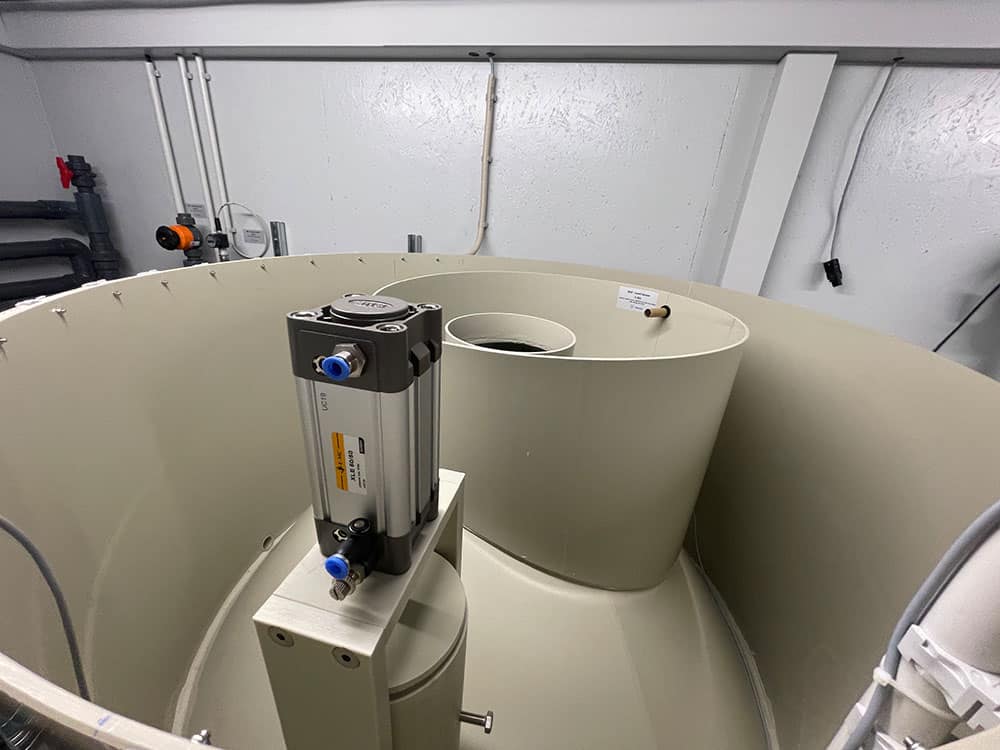
Our DAF units are installed worldwide, across a wide range of industries, and our unique pressure release design is a protected and registered utility model. Manufactured from polypropylene or polyethylene, they have incredible corrosion resistance when compared to steel.






Description
ClearFox® Dissolved Air Flotation (DAF) is a physico-chemical separation process used to remove solids, oils, hydrocarbons, dissolved metals and organic compounds (COD) from process water and wastewater.
ClearFox® DAF systems are robust, reliable, and have been successfully used for years across various industries. The units do not use any mechanical sludge scrapers with moving chains (no lubrication required) reducing operating and maintenance costs. An optional remote monitoring and access system is available allowing real-time monitoring and remote adjustments. Customers have direct access and can view all relevant operating conditions at any time. All our technical components are certified and approved.
How ClearFox® DAF works
The ClearFox® DAF is a fully automated unit. The wastewater to be treated is fed via a clog-free cavity pump either from the customer’s equalization tanks or from ClearFox® buffer tanks.
In a polymer preparation station, additives are mixed to support the flocculation and flotation process. These polymers are automatically dosed into the incoming wastewater.
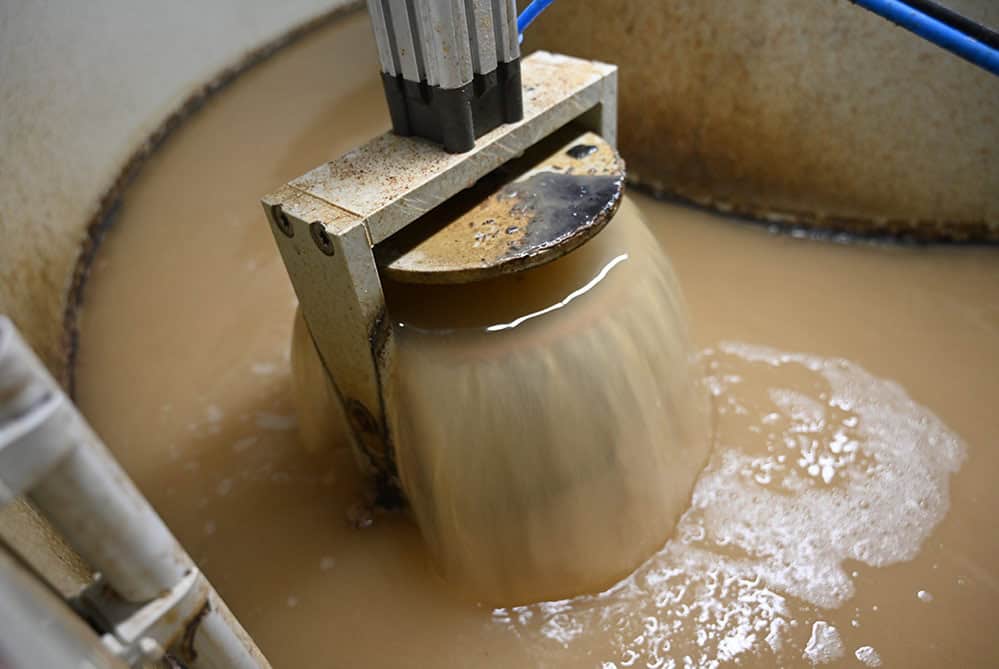
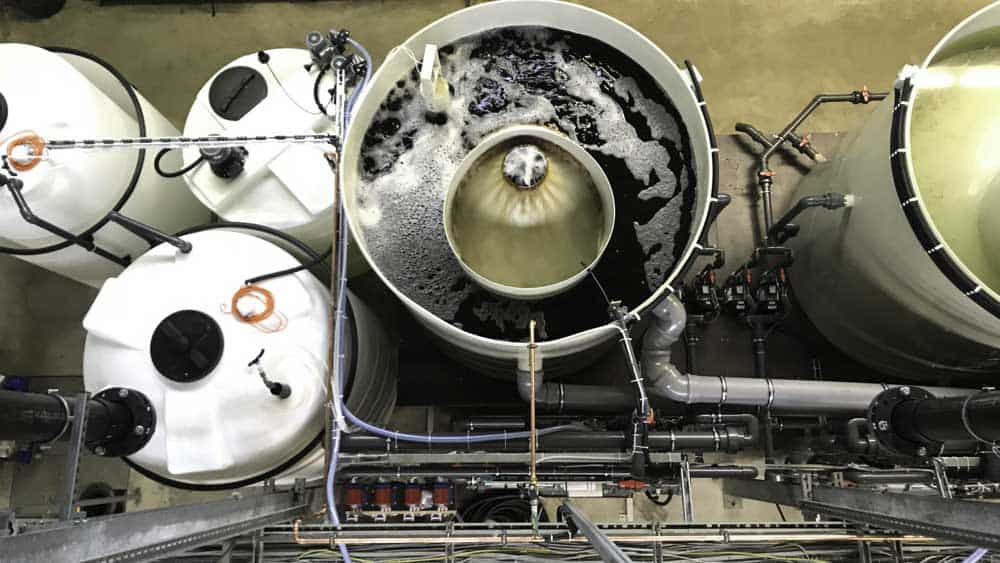
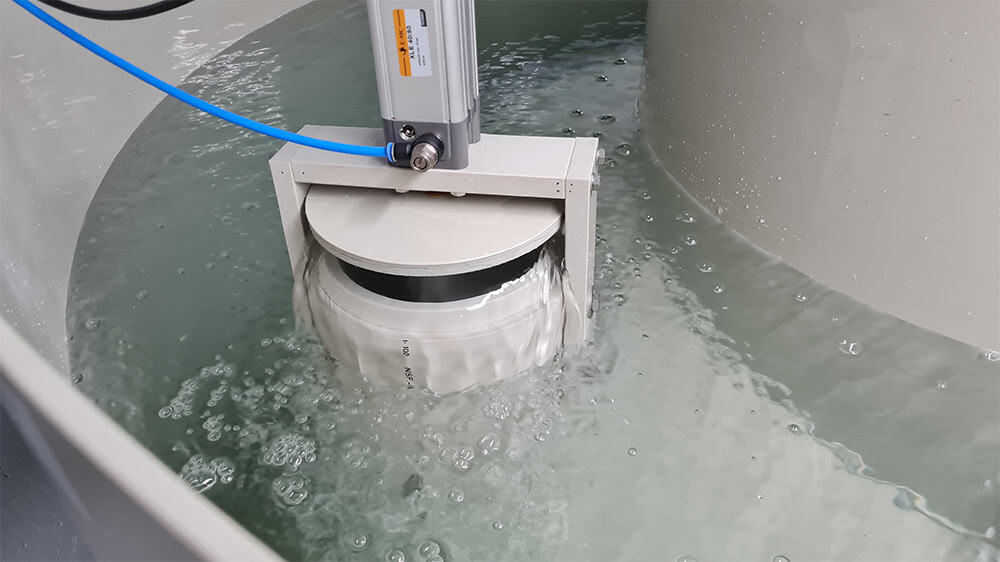
Using a multiphase pump, the water stream is continuously saturated with air and then fed into the reactor via recirculation. The pressure release causes fine air bubbles to lift suspended solids to the surface. These floatables are collected in the upper part of the reactor, concentrated, and discharged through a conical outlet using compressed air.
The treated wastewater is discharged from the middle of the reactor and can either be released as clean water or directed to the next treatment stage. The compacted sludge is discharged by gravity.
Automatic, inline pH adjustment is included as standard.
Key Features and Benefits of ClearFox® DAF
✔ Cost Efficiency
The vertical-flow DAF design enhances mixing and flotation efficiency while optimized tank geometry reduces chemical consumption by up to ~15%, lowering overall operating costs.
✔ Compact & Flexible Design
The modular system architecture tailored to site-specific requirements features a compact footprint compared to conventional systems and supports containerized, plug-and-play deployment with flexible installation options for diverse facility layouts.
✔ Automated Operation
The fully automated control system minimizes operator involvement while integrated process and dosing management ensure consistent performance, supported by remote monitoring for real-time access and adjustments from anywhere.
✔ Durability & Chemical Resistance
The PP/PE tank construction eliminates corrosion risks in high chloride, sulphate, or low pH environments, enabling material-independent performance and extending equipment lifetime to reduce replacement and lifecycle costs.
✔ Low-Maintenance Design
The system eliminates scraper chains and internal moving parts, avoiding lubrication and mechanical failures, while its simplified design reduces wear components and downtime and ensures proven long-term reliability with minimal service requirements.
✔ Simplified Operation Technology
The multiphase pump generates whitewater without the need for a pressure vessel, eliminating annual inspections, reducing compliance and maintenance costs, and enabling a safer, simpler system for easier operation and servicing.
✔ Reduced Sludge Volume
Higher dry solids content (up to 2× versus conventional systems) reduces sludge volume, enabling smaller downstream equipment for lower CapEx and, in many cases, allowing direct disposal to minimize handling and disposal costs.
ClearFox® DAF Video
ClearFox® DAF Downloads
ClearFox® DAF Reference Projects


ClearFox® DAF FAQs
1. What is the ClearFox® Dissolved Air Flotation (DAF) system?
The ClearFox® DAF is a modular unit designed for the efficient treatment of various types of industrial wastewater. It utilizes advanced technology to achieve high removal rates of pollutants, making it a flexible solution applicable to a wide range of wastewater applications.
2. What capacities can the ClearFox® DAF system handle?
The system’s capacities range from 1 m³/hr to 250 m³/hr. Its modular design allows for standalone installations or integration as a pretreatment step within a larger wastewater treatment plant.
3. What industries can benefit from the ClearFox® DAF system?
The ClearFox® DAF system is suitable for numerous industries, including:
- Meat processing and slaughterhouses
- Fish processing
- Dairy production
- Wine and juice production
- Breweries
- Canning factories
- Commercial kitchens and canteens
- Restaurants
- Cosmetics production
- Food transport companies
- Chemical industry
- Pharmaceutical industry
- Petrochemical industry
- Textile industry
- Paper industry
- Municipal wastewater treatment
- Plastic recycling industry
4. What are the key advantages of the ClearFox® DAF system?
The ClearFox® DAF system offers several benefits:
- High efficiency in reducing Chemical Oxygen Demand (COD), Biological Oxygen Demand (BOD), and Fats, Oils, and Grease (FOG) by up to 99%
- Self-cleaning patented design, eliminating the need for mechanical scrapers in many applications
- Two-stage DAF process, unlike standard single-stage systems
- Integrated feed pump
- pH adjustment and flocculation system
- Lower chemical requirements compared to standard DAF systems
- Construction from polypropylene and high-density polyethylene, offering higher resistance to various liquids and chemicals compared to steel
- Suitability for high Total Dissolved Solids (TDS) wastewater
- Fully automatic operation
- Standardized manufactured models
- Compact design with a smaller footprint than standard DAF systems
- Clog-free saturation system
- Production of pre-thickened flotation sludge
- Ease of service
5. How does the ClearFox® DAF system work?
The ClearFox® DAF system operates fully automatically. A helical rotor pump feeds wastewater from an onsite equalization or collection tank into the reactor. The wastewater passes through a pH-regulation system to adjust any fluctuations before entering the DAF reactor. Additives are mixed in a polymer preparation station to aid flocculation. The system’s advanced design ensures efficient separation of pollutants from the wastewater.
6. What maintenance is required for the ClearFox® DAF system?
The ClearFox® DAF system is designed for low maintenance, featuring a self-cleaning patented design that often eliminates the need for mechanical scrapers. Its fully automatic operation and construction from corrosion-resistant materials further reduce maintenance requirements. Regular checks of wastewater composition, chemical supply, and air pressure are recommended to ensure optimal performance.
7. Can the ClearFox® DAF system be integrated into existing wastewater treatment plants?
Yes, the ClearFox® DAF system’s modular design allows for easy integration as a pretreatment step within existing wastewater treatment plants. It can also function as a standalone solution, depending on the specific requirements of the facility.
8. What materials are used in constructing the ClearFox® DAF system?
The ClearFox® DAF system is constructed from polypropylene and high-density polyethylene. These materials offer higher resistance to various liquids and chemicals compared to steel, enhancing the system’s durability and suitability for treating diverse wastewater types.
9. Is the ClearFox® DAF system suitable for high Total Dissolved Solids (TDS) wastewater?
Yes, the ClearFox® DAF system is suitable for treating wastewater with high Total Dissolved Solids (TDS) content, making it versatile for various industrial applications.
10. How does the ClearFox® DAF system handle sludge?
The system produces pre-thickened flotation sludge, which simplifies sludge handling and disposal processes. This feature contributes to the system’s overall efficiency and ease of operation.